
WHERE THEY STAND ON PUBLIC SAFETY
DC communities deserve leaders who have both empathy and commonsense. Here’s where the two leading candidates for D.C. Council, At-Large stand on public safety in the District of Columbia.
ISSUE 1 - POLICE STAFFING
The Metropolitan Police Department is facing its most severe staffing crisis in over 50 years. The department currently has just 3,144 sworn officers - a loss of more than 660 officers since 2020 alone. Mayor Bowser has set a goal of returning to over 4,000 sworn officers, a level the District enjoyed during the sharp reductions in crime a decade ago. The current officer shortage has forced MPD to rely on expensive overtime. Officers logged nearly 2 million overtime hours last fiscal year, costing the city over $130 million. That current trajectory is unsustainable for officers and the District neighborhoods they serve. Unfortunately, without help from the D.C. Council, the situation shows no sign of improving: in FY2025, MPD hired 162 officers but lost 257. Former Chief Robert Contee warned the DC Council that staffing may not recover for more than a decade.
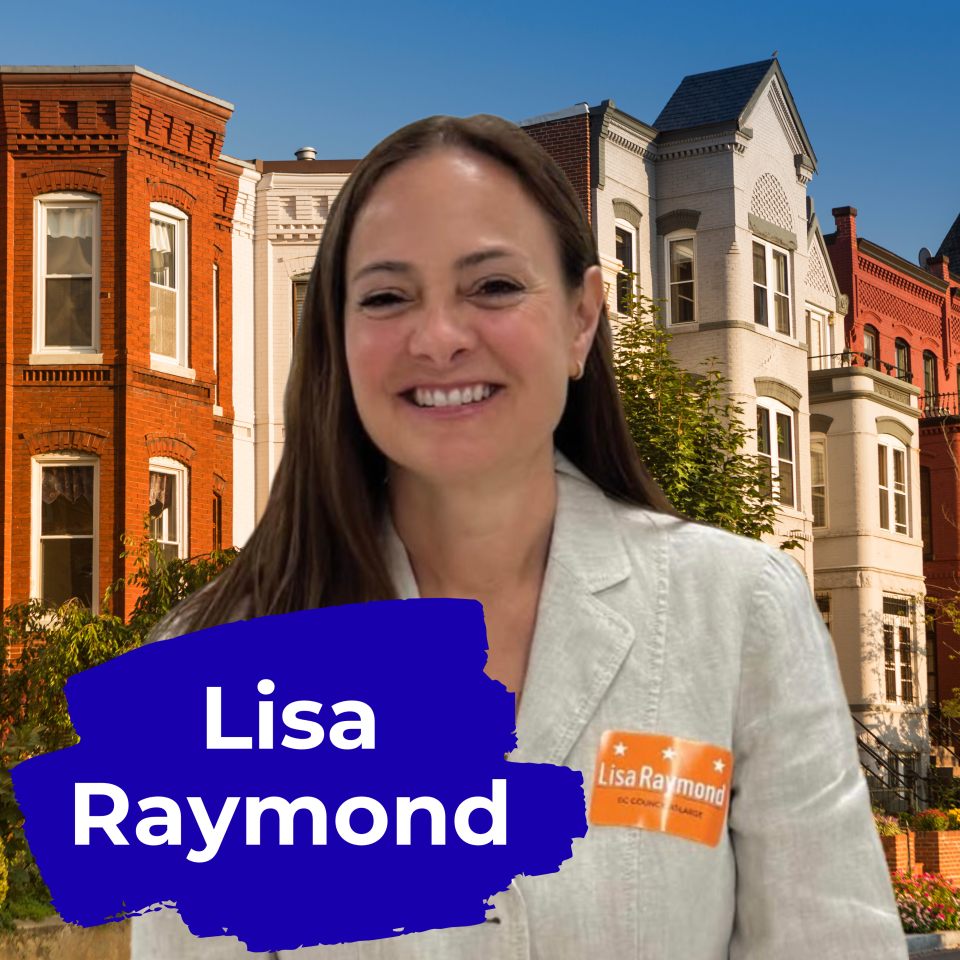
Lisa Raymond supports rebuilding MPD and putting more officers on DC streets.
Raymond says MPD should employ “more officers” and supports “sufficient resources for additional recruitment and training” to meet appropriate staffing levels. At a time when MPD is stretched thin, Raymond’s position meets the urgency of the moment: DC needs faster response times, stronger deterrence and more officers on the street - not fewer.
Read more here: Opportunity DC Candidate Survey, 2026

Oye Owolewa would take DC backward on public safety.
Owolewa has attacked efforts to strengthen MPD, writing that DC’s plan to “pour $314 million more into policing” is “a step backward.” His campaign criticizes the District’s “largest police budget in history” and calls for putting “people before punishment” instead of expanding enforcement. At a time when MPD is already hundreds of officers short, Owolewa’s position would deepen the staffing crisis, slow police response times and make it harder to deter crime in DC neighborhoods.
Read more here: Washington Informer Op-ed; Vote4Oye.com
ISSUE 2 - DETENTION OF VIOLENT OFFENDERS
For years, DC judges faced a significant legal obstacle when it came to keeping violent offenders off the streets. Under DC Court of Appeals precedent, no matter how serious the alleged offense - including rape, kidnapping or aggravated assault - a judge could not detain a defendant based on the facts of the crime alone unless a “rebuttable presumption” applied. The Secure DC Omnibus Amendment Act of 2024 addressed this directly, creating a rebuttable presumption of pretrial detention for violent crimes - meaning a judge is presumed to order detention, while the defendant retains the right to challenge it. Judges still hold ultimate discretion; the law simply gives them clearer statutory authority to act on the danger a defendant poses to the community.
The results have been significant. In April 2025 testimony, the U.S. Attorney’s Office said Secure DC gave prosecutors, police and judges targeted tools and noted that violent crime was down 27% from the same point in 2024. The office also strongly supported making Secure DC’s adult pretrial detention changes permanent. Yet the DC Council has so far declined to do that - instead extending the provision only through December 2026, leaving its future uncertain. Allowing these protections to lapse would strip judges of tools they are only now beginning to use effectively - and would return the District to a legal framework where the severity of a violent crime alone is not enough to keep a dangerous individual off the streets while their case moves through the courts.
Lisa Raymond supports allowing judges to keep dangerous violent offenders off DC streets before trial.
Raymond says she supported Secure DC because it “appropriately focuses on accountability and prevention,” and she supports “swift and fair consequences for violent offenses.” Her position gives judges the discretion they need to protect DC residents from dangerous defendants while their cases move through the courts.
Read more here: Opportunity DC Candidate Survey, 2026
Oye Owolewa would weaken a key tool for keeping dangerous defendants off DC streets.
Owolewa’s campaign says he will “oppose expansions of pretrial detention” and “reject efforts to create new crimes or longer sentences.” That means he would fight the very tools that allow judges to act when violent defendants pose a danger to the community - leaving DC residents less protected at the exact moment the city needs stronger enforcement.
Read more here: Democratic Socialist of America Candidate Survey; Vote4Oye.com
ISSUE 3 - JUVENILE CURFEWS
The District has been experiencing "teen takeovers" - large, social-media-organized gatherings that, since 2023, have repeatedly turned violent in neighborhoods like Navy Yard and U Street. So in summer 2025, DC tried a smart, targeted approach on a temporary basis: the Juvenile Curfew Emergency Amendment Act of 2025 gave the police chief authority to declare narrow "extended juvenile curfew zones," where groups of minors must disperse as early as 8 p.m. at the chief's discretion and tied to specific public-safety findings.
The District applied that temporary authority in a limited, targeted way — and that track record is what now justifies making it permanent. Judiciary Committee Chair Brooke Pinto reported no arrests in any of the curfew zones over summer 2025, and the Mayor's office reports that in 2026 the city designated 14 curfew zones, none lasting more than three days, that produced just seven total violations. Even initially skeptical members came around: At-Large Councilmember Christina Henderson said the curfew's performance over the summer convinced her to support continuing it. After a year of stop-and-start emergency renewals, the Council voted 8-5 on May 5, 2026. But with just a two vote margin, the D.C. Council could reverse the law next year. See where the candidates in the At-Large race stand on giving the police chief a durable, narrowly drawn tool to break up dangerous gatherings before they turn violent.
Lisa Raymond supports targeted juvenile curfews with oversight and clear limits.
Raymond said she “absolutely support[s] the Mayor and Chief of Police having authority to declare curfews for large groups of young people on an emergency basis,” while requiring “clear parameters,” “reporting requirements” and “sunsetting provisions” so curfews are targeted, accountable and not indefinite.
Read more here: Opportunity DC Candidate Survey, 2026
Oye Owolewa opposes youth curfews and rejects law-based public safety tools.
Owolewa’s campaign says he will “oppose youth curfews,” and he has argued that “laws don’t make people safe, people do.” At a time when DC has used targeted curfew zones to break up dangerous gatherings with limited violations and no broad dragnet, Owolewa would take that tool away and move the city in a weaker, less safe direction.
Read more here: Vote4Oye.com; Oye Owolewa - X.com, April 21, 2026.